
Best Stud Finder (2026): Honest Picks by Wall and Budget
The best stud finder for most people
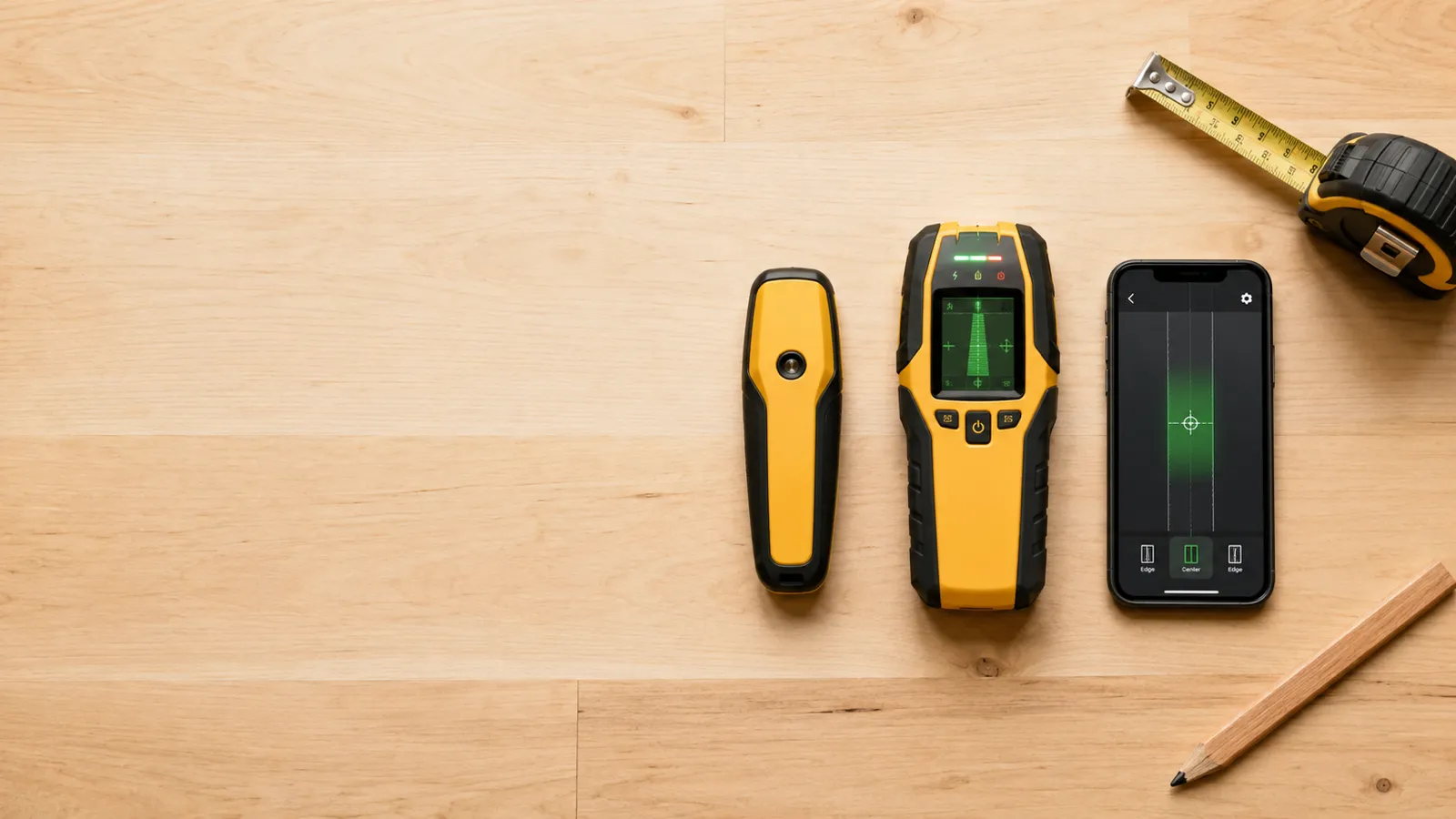
For a homeowner hanging shelves, frames, and the occasional TV on standard drywall, the best stud finder is a multi-sensor electronic finder — a flat unit with a row of sensors that lights up across the entire width of a stud, so you see both edges and the center in one pass and never have to calibrate. The Franklin ProSensor line is the best-known example of this design.
But the honest answer is that you may not need to buy anything. The magnetometer in your phone already finds the screws that mark every stud on a drywall wall, free, accurate to within about an inch. Start there, and buy hardware only if your walls give it trouble. For the app side specifically, see our best stud finder app roundup.
Types of stud finder, by how they actually work
Every stud finder falls into one of five families, and each reads a completely different signal:
| Type | What it reads | Typical cost | Best at |
|---|---|---|---|
| Magnetic | Pull of the metal fasteners | Under ~$20 | Cheap, battery-free, drywall |
| Electronic (capacitive) | Density change behind the surface | ~$20–40 | Finding stud edges quickly |
| Multi-sensor electronic | Density across a sensor array | ~$40–60 | Showing the whole stud at once |
| Radar / imaging | Reflections from objects in the wall | ~$60–150 | Spotting pipes, wires, and studs |
| Phone magnetometer app | Magnetic field of fasteners | Free | A first read on drywall, in your pocket |
Magnetic finders and phone apps both chase the fasteners. Electronic and multi-sensor finders read density to find the wood itself. Radar units image what’s back there. None is “best” in the abstract — they’re best at different walls.
Best stud finder by use case
Match the tool to the job, not to the price tag:
- Hanging light stuff on drywall → a free phone app or a $15 magnetic finder. Don’t overthink it.
- Mounting a heavy TV → a multi-sensor electronic finder to nail the center, then a pilot hole to confirm wood before the lag goes in.
- Plaster-and-lath walls → a deep-scan electronic finder, and expect to probe; fastener-based tools struggle here.
- Avoiding live wires or pipes → a multi-mode scanner with AC and metal detection, or a radar imager that shows what’s behind the surface.
- Pro or daily use → a multi-sensor or radar unit you trust; the time saved pays for it.
- No budget, right now → the magnetometer app already on your phone.
Where a phone app fits in the lineup
A phone app isn’t a toy version of a stud finder — it’s a legitimate magnetic finder that happens to live in your pocket. On drywall over wood, it does the same job a $15 magnetic finder does, with a live readout instead of a wobbling needle, and nothing to buy or charge. Where it gives way is the same place cheap magnetic finders do: plaster, metal framing, and heavy mounts that deserve a second opinion. Treat it as your default first scan and a hardware finder as the backup for hard walls. That two-tool habit — app first, hardware to confirm — is covered in our app vs hardware comparison.
What to ignore when you buy
A few features get marketed harder than they earn:
- Inflated accuracy claims. No consumer finder is reliable on every wall type. Treat “works on any surface” as marketing, not fact.
- Center-find LEDs as gospel. They point at a density peak, not a guarantee. Always verify with a tap or a pilot hole.
- Bundled gimmicks. Laser levels and bottle openers don’t make a finder read walls better.
- Top-of-range pricing for drywall. If your home is standard drywall over wood, the mid-tier multi-sensor finder — or the free app — already covers you.
The bottom line
The best stud finder in 2026 is the one matched to your wall. Standard drywall? A free phone app or a multi-sensor electronic finder handles nearly everything a homeowner mounts. Plaster, metal studs, or live-wire worries? Step up to a deep-scan or radar unit and verify every mark. Start with the tool already in your pocket, and spend money only where the wall actually demands it.
Try the stud finder app first — free to try, ad-free, no signup to start.
Frequently asked questions
How to Find Ceiling Joists: 5 Ways That Actually Work
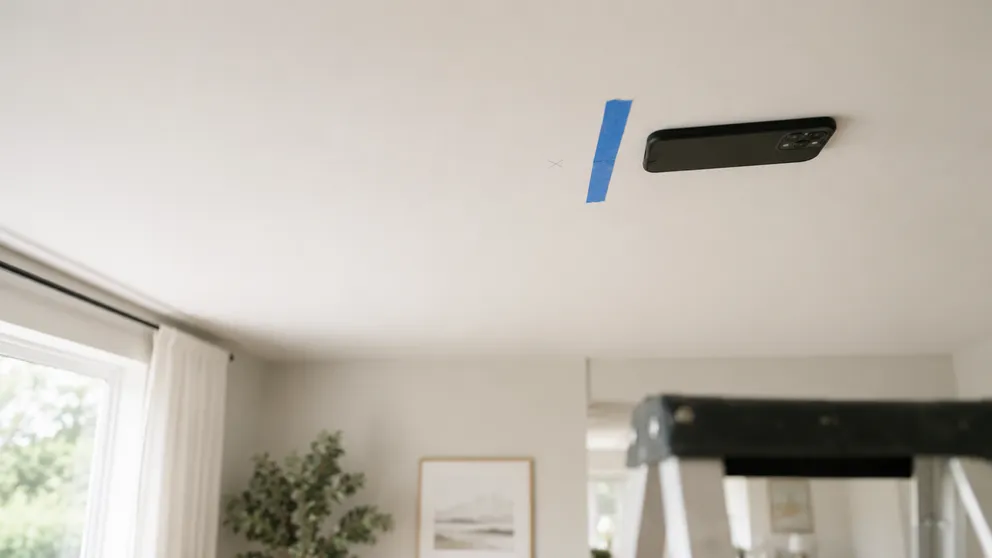
Find ceiling joists with a phone app, a magnet, or a tape measure. Joists run 16 or 24 inches on center — and a ceiling joist finder is already in your pocket.

Stud Finder App vs Walabot: Which Do You Actually Need?
Stud finder app vs Walabot — one is free and lives on your phone, the other is a paid imaging device that sees pipes and wires. An honest comparison of what each finds, and which fits your job.
See behind the wall,
now in your pocket.
Stud Finder turns your phone into a precision wall scanner. Know where the studs, screws and pipes are before you drill.
Download the App