
Stud Finder App vs Walabot: Which Do You Actually Need?
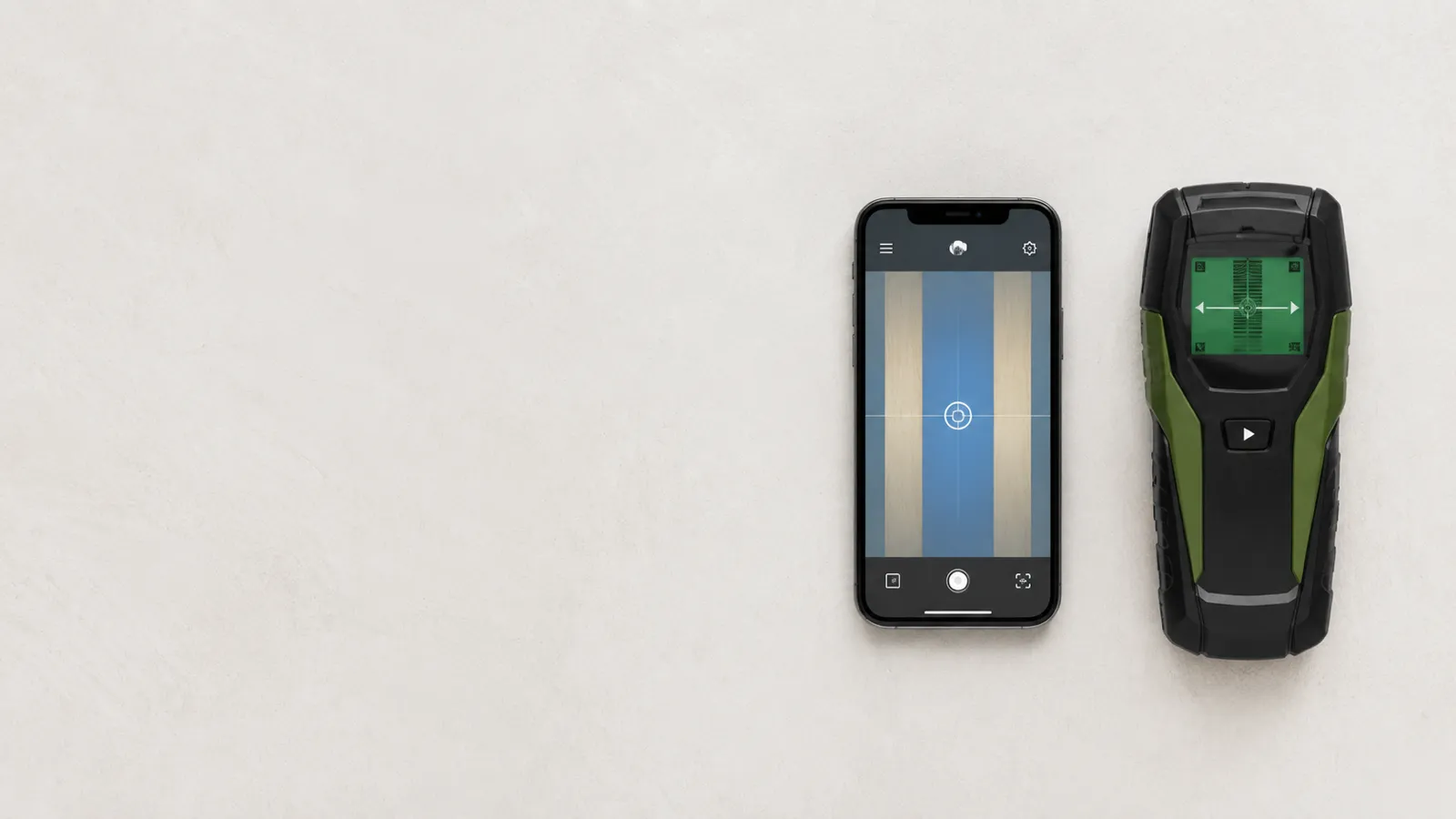
Stud finder app vs Walabot: the honest difference
The core difference is what each one detects. A stud finder app reads your phone’s magnetometer and reacts to the steel screws and nails in a stud — it tells you where the studs are. A Walabot is a radio-frequency imager that you tether to a phone; it scans the wall and renders an approximate picture of everything inside it: studs, copper and metal pipe, electrical conduit, and even movement.
| Stud finder app | Walabot | |
|---|---|---|
| Cost | Free to try | Paid hardware device |
| What it needs | Just your phone | A separate scanner + phone |
| Finds studs | Yes, via fasteners | Yes, via imaging |
| Finds pipes & wires | No, not reliably | Yes |
| Works on plaster | Poorly | Better |
| Output | A spike at each fastener | A visual map of the wall |
Neither is strictly “better.” The app wins on cost and convenience; the Walabot wins on what it can see.
What a Walabot does that an app can’t
A Walabot’s imaging is a genuinely different capability. Because it reads reflections rather than a single magnetic field, it can:
- Map pipes and wires, so you can avoid them before you drill
- Read through plaster far better than a magnetometer can
- Show approximate depth, not just left-right position
- Detect movement behind the wall in its specialized modes
If your work involves opening walls, running plumbing, or fishing cable, that picture is worth real money. An app simply has no sensor for most of it.
What an app does that a Walabot doesn’t
The app’s advantage is that it removes every barrier between you and a stud:
- Nothing to buy — it’s already on the phone in your hand.
- Nothing to carry or charge — no extra device, no batteries, no tether.
- Free to try before you commit to anything.
- Good enough on drywall — for the wall most homes are built from, it finds studs to within about an inch.
For the overwhelmingly common job — hanging a shelf, a frame, or a TV on a drywall wall — that’s the whole task, done for free. See our best stud finder app roundup for where it shines.
“X-ray stud finder” — what these tools really see
Searches for an “x-ray stud finder” are really asking: can I see through my wall? Honestly, no — not the way the phrase suggests. A Walabot uses radio-frequency imaging and shows fuzzy shapes and depths, not a crisp photo, and a magnetometer app shows only magnetic spikes. The Walabot is the closest thing to “seeing into” a wall that’s affordable, but set expectations: it’s a helpful approximation, not Superman vision. Anything that promises true x-ray imaging at a consumer price is overselling.
Which one should you choose?
- Choose the app if you mostly hang things on drywall, want it free, and don’t need to dodge pipes or wires. It’s the right default for most homeowners.
- Choose a Walabot if you regularly work on plaster, need to avoid plumbing and electrical, or want a visual map before cutting into a wall.
- Use both if you do enough DIY to justify it — app for a fast everyday stud check, Walabot for the jobs where what’s around the stud matters. The same logic shows up in our broader app vs hardware comparison.
The bottom line
A stud finder app and a Walabot aren’t really competitors — they sit at opposite ends of the same shelf. The app finds studs on drywall for free, in your pocket, no setup. The Walabot images the whole wall, pipes and wires included, for a price. Start with the free app, and step up to imaging only when your walls — or your projects — need to see more than where the studs are.
Try the stud finder app first — free to try, ad-free, no signup to start.
Frequently asked questions
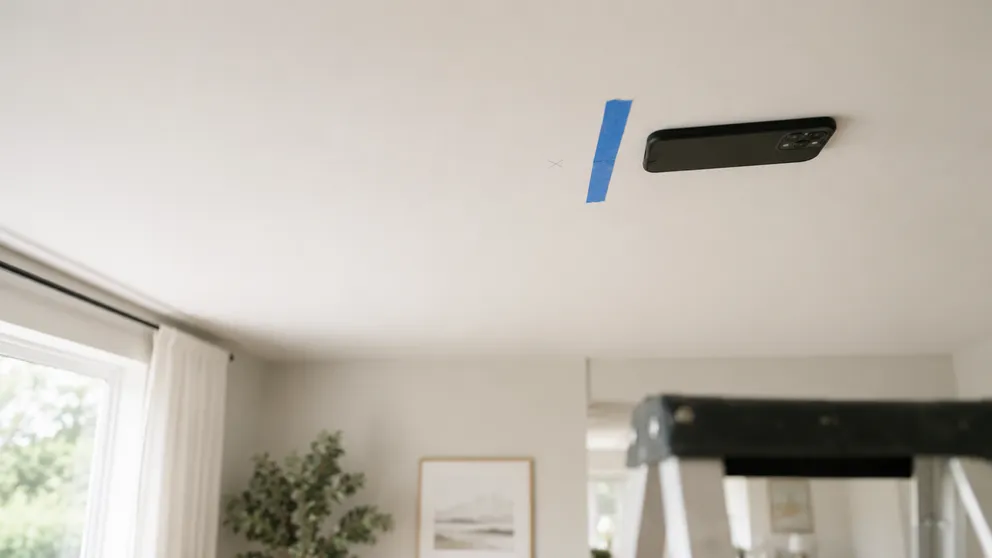
How to Find Ceiling Joists: 5 Ways That Actually Work
Find ceiling joists with a phone app, a magnet, or a tape measure. Joists run 16 or 24 inches on center — and a ceiling joist finder is already in your pocket.
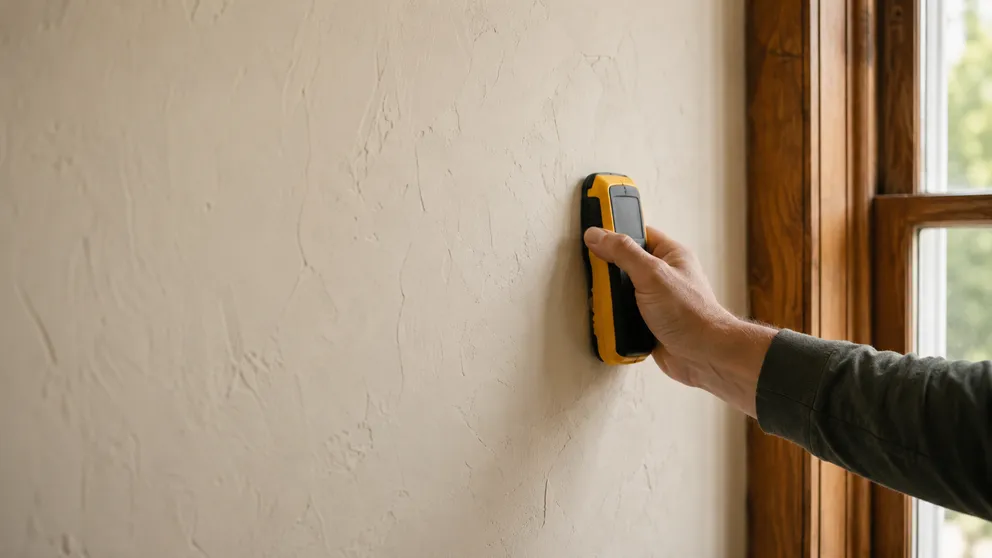
Stud Finder for Plaster Walls: What Works and What Doesn't
Plaster-and-lath walls defeat most stud finders, apps included. Why plaster is so hard, what actually finds studs behind it, and how to fix a stud finder that's not finding studs.
See behind the wall,
now in your pocket.
Stud Finder turns your phone into a precision wall scanner. Know where the studs, screws and pipes are before you drill.
Download the App