
How Does a Stud Finder Work? The 4 Methods Explained
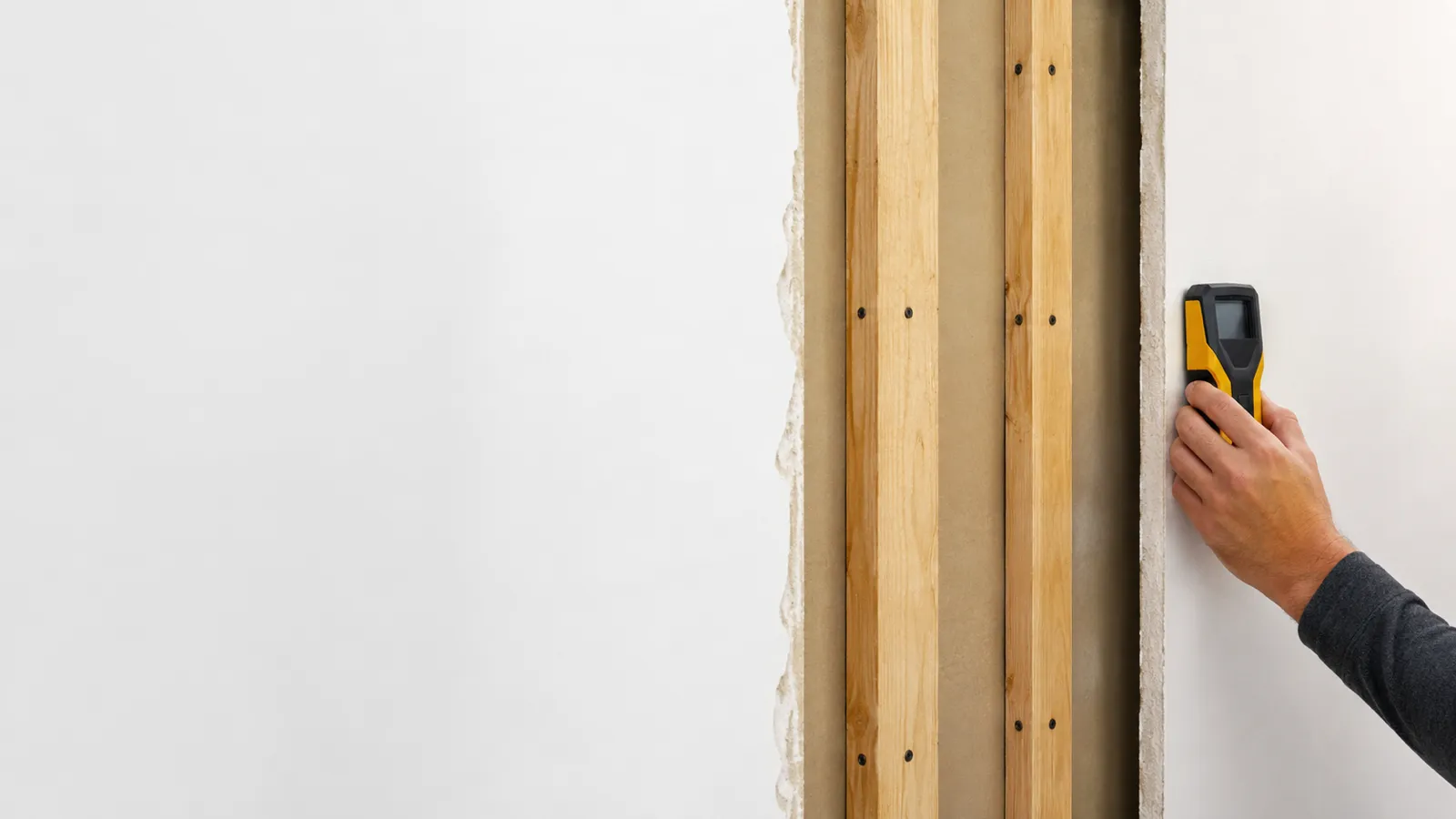
How does a stud finder work?
A stud finder works by detecting one of two things behind the wall surface: the metal fasteners driven into a stud, or the stud itself by its density or reflectivity. No consumer tool sees a clean picture of the framing — each reads one indirect signal and infers where the wood is. That’s why two finders can point at the same stud while measuring completely different physics.
There are four methods in common use. Here’s what each one actually senses.
Magnetic stud finders
A magnetic finder is the simplest tool there is: a magnet, free to move, with no battery. Drywall is screwed or nailed to each stud with steel fasteners every 12–16 inches, and those fasteners are ferrous. Drift the magnet across the wall and it tugs toward a screw when it passes one. The stud sits directly behind that screw. It detects the fastener, never the wood, which is why it needs nothing more than a magnet and a steady hand.
Capacitive (electronic) stud finders
A capacitive finder reads density, not metal. Its sensor plate measures the dielectric constant of the wall — essentially how the material stores an electric charge. Over a hollow cavity that value is low and steady; slide over a solid wood stud and the denser material shifts the reading, which the tool flags as an edge. Cheaper models mark just the edges; multi-sensor models use a row of plates to light up the whole stud at once. This is the only common method that detects the wood directly.
Radar and imaging stud finders
Radar finders send a radio-frequency signal into the wall and read the reflections that bounce back. Different materials — wood, metal pipe, electrical wire, empty air — reflect differently, so the tool can map not just studs but pipes, conduit, and even movement behind the surface. It’s the most informative method and the priciest, and it reads the contents of the wall rather than a single property. This is the technology people loosely call “x-ray,” though nothing here actually sees through anything.
Phone magnetometer apps
A phone app uses the magnetometer — the same chip that runs your compass — to read the magnetic field of the fasteners. The sensor is sensitive enough to pick a drywall screw out of Earth’s 25–65 μT ambient field, so when you sweep past a fastener the reading spikes and the app marks it. Like a magnetic finder, it detects the metal in the stud, but it shows you the signal on screen instead of relying on pull. For the device-level detail, see how an iPhone stud finder works.
Which method works on which wall
| Method | Detects | Best wall | Struggles on |
|---|---|---|---|
| Magnetic | Fasteners | Drywall over wood | Plaster (lath nails flood it) |
| Capacitive | Density | Drywall over wood | Plaster, thick or layered walls |
| Radar | Reflections | Most walls | Very dense or wet materials |
| Phone app | Fasteners (magnetic) | Drywall over wood | Plaster, metal studs, masonry |
The pattern: fastener-based tools (magnetic and app) want clean drywall over wood, density and radar tools handle more variety, and every method loses confidence on plaster and metal framing. To see how this plays out across real products, read our wall stud finder app guide.
The bottom line
A stud finder works by reading one indirect clue — magnetic pull, density, reflection, or magnetic field — and inferring where the framing is. Magnetic finders and phone apps chase the screws; capacitive and radar finders chase the wood. Knowing which signal your tool reads tells you exactly when to trust it and when the wall is about to fool it.
Curious how the magnetometer method feels in practice? Try the stud finder app — free, ad-free, no signup to start.
Frequently asked questions
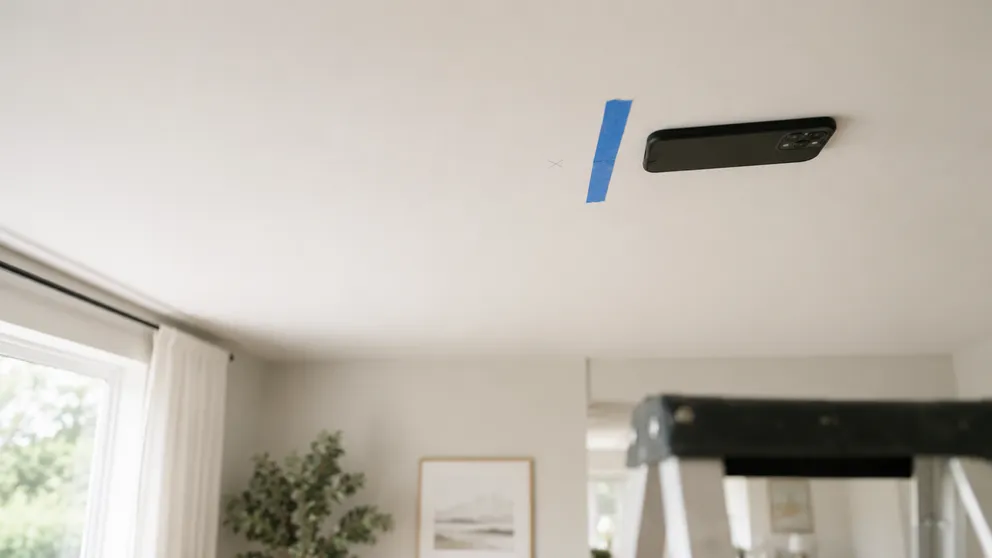
How to Find Ceiling Joists: 5 Ways That Actually Work
Find ceiling joists with a phone app, a magnet, or a tape measure. Joists run 16 or 24 inches on center — and a ceiling joist finder is already in your pocket.
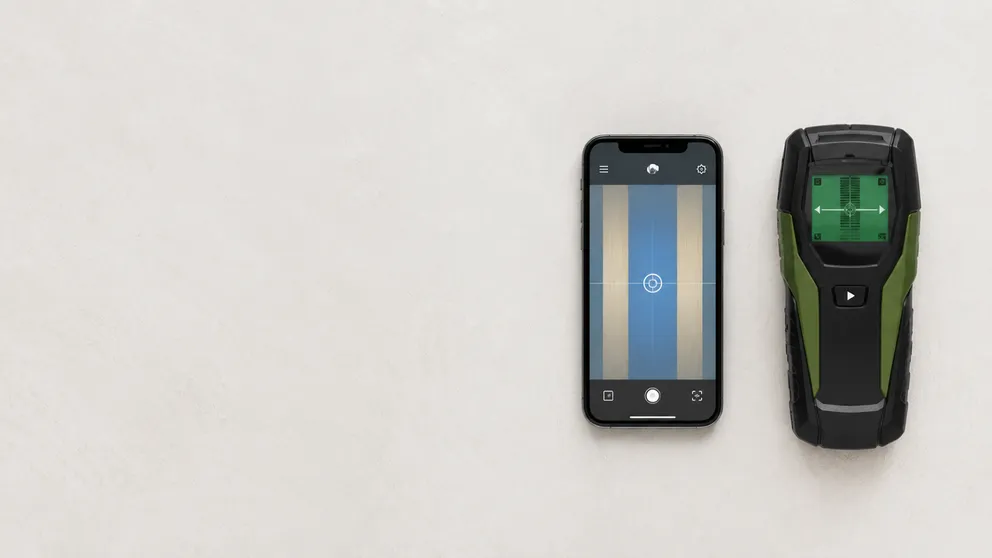
Stud Finder App vs Walabot: Which Do You Actually Need?
Stud finder app vs Walabot — one is free and lives on your phone, the other is a paid imaging device that sees pipes and wires. An honest comparison of what each finds, and which fits your job.
See behind the wall,
now in your pocket.
Stud Finder turns your phone into a precision wall scanner. Know where the studs, screws and pipes are before you drill.
Download the App